

Article Summary
● The best US university for a Saudi scholarship depends on your specialisation, degree level, admission profile and the scholarship route you plan to use.
● Strong universities worth comparing include MIT, Stanford, Harvard, UC Berkeley, Princeton, Columbia, Johns Hopkins and the University of Michigan.
● US accreditation, Saudi recommended-university status and scholarship eligibility are three different checks; one does not automatically prove the others.
● Admission requirements vary by university, school and programme, including GPA expectations, IELTS or TOEFL, SAT/ACT, GRE/GMAT and supporting documents.
● Choose by programme strength, scholarship eligibility, admission fit, cost, location, research and career opportunities—not overall ranking alone.
Choosing the best universities in the USA for scholarship study is not only about global rankings or name recognition. For Saudi students, the right university depends on the strength of the programme in your field, the admission requirements, and whether the university, degree level and specialisation are eligible under the scholarship route you plan to use.
Many students search for “approved US universities” or “the best universities in America for scholarship students,” but there is no single university that is best for everyone. A university can be academically excellent and still be the wrong choice for your programme, degree level, budget or scholarship track.
This guide compares major US universities worth considering in 2026, explains what “approved” can mean for a Saudi student, reviews admission and English-language requirements, and shows you how to choose and apply more strategically.
What are the best US universities for scholarship students?
- Leading options include MIT, Stanford, Harvard, UC Berkeley, Princeton, Columbia, Johns Hopkins and the University of Michigan.
- The strongest choice depends on your specialisation, degree level, admission profile and scholarship route.
- Before applying, compare the academic programme itself, IELTS or TOEFL requirements, research and career opportunities, and current scholarship eligibility.
- A university with a higher overall ranking is not automatically the best university for your field.
Best universities in the USA for scholarship students in 2026
The universities below are strong options to compare, but inclusion in this guide does not mean that every programme at every degree level is automatically eligible for a Saudi scholarship. Always verify the current scholarship list and the exact academic programme before applying.
Before you choose: what does “approved university” mean for a Saudi student?
Three different concepts are often confused:
- US academic accreditation: whether the institution or programme holds appropriate accreditation in the United States.
- Recommended universities in Saudi Arabia: whether the university, specialisation and degree level appear in the relevant Saudi Ministry of Education service or recognition process.
- Scholarship eligibility: whether the university, programme and degree level are eligible under the specific scholarship route you are applying through.
These are not the same thing. A university can be accredited in the US without automatically being eligible for every Saudi scholarship programme.
How does the scholarship route change your university options?
Saudi scholarship routes can use different university lists, specialisation priorities and degree-level rules. Some routes focus on highly ranked institutions, others prioritise labour-market needs or specific sectors, and some are tied to named programmes or opportunities.
For that reason, start with the scholarship route that fits your situation, then check the universities and programmes available within that route. Do not choose a university first and assume it will qualify everywhere.
Group 1: highly selective US universities
These universities are among the most academically competitive options in the United States. They are suitable for students with strong academic profiles, but admission standards vary by school, programme and degree level.
1. Massachusetts Institute of Technology (MIT)
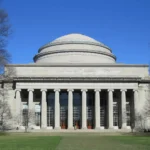
MIT is especially strong in engineering, computer science, artificial intelligence, mathematics, physics, data science and other research-intensive fields.
- Best fit: engineering, computing, AI, applied sciences and research.
- Academic style: highly quantitative, research-driven and project-oriented.
- Competitiveness: extremely high; requirements differ substantially between undergraduate and graduate programmes.
- What to verify: department requirements and scholarship eligibility for your exact programme.
2. Stanford University

Stanford is located in California near Silicon Valley and is widely known for computing, engineering, entrepreneurship, business, sustainability and biomedical research.
- Strong areas: computer science, AI, electrical engineering, business, renewable energy and biomedical sciences.
- Environment: close links to technology and innovation ecosystems.
- Competitiveness: very high across many programmes.
- What to verify: school-specific requirements, English-language policy and current scholarship route rules.
3. California Institute of Technology (Caltech)

Caltech is a small, research-intensive institution in Pasadena, California, with particular strength in science and engineering.
- Strong areas: physics, astronomy, aerospace, chemical engineering, materials science, computing and applied mathematics.
- Research: Caltech manages NASA’s Jet Propulsion Laboratory, creating a distinctive research environment for space and engineering fields.
- Competitiveness: extremely high.
- Best for: students who want deep scientific or research-focused training.
4. Duke University

Duke University in North Carolina is strong in biomedical engineering, health sciences, medicine, business, public policy, environmental studies and computing.
- Strong areas: biomedical engineering, health, business, public policy and electrical engineering.
- Research environment: major health and biomedical research infrastructure.
- Competitiveness: high, especially in medical and biomedical fields.
5. Johns Hopkins University
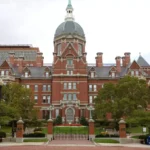
Johns Hopkins University is particularly well known for medicine, public health, biomedical engineering, epidemiology, neuroscience and international studies.
- Strong areas: medicine, public health, biomedical engineering, epidemiology and neuroscience.
- Best fit: students targeting health, medical or advanced research programmes.
- Important: competitiveness and requirements vary widely across schools and departments.
6. University of Chicago
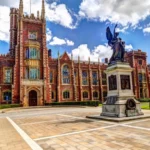
The University of Chicago is especially strong in economics, social sciences, public policy, data-oriented fields, law and fundamental research.
- Strong areas: economics, data science, public policy, social sciences and law.
- Academic environment: analytical and research-intensive.
- What to verify: the division or school you are applying to, because requirements differ significantly.
7. University of California, Berkeley

UC Berkeley is a major public research university known for engineering, computer science, data science, economics, environmental fields, public policy and the sciences.
- Strong areas: engineering, computing, data science, economics and environmental studies.
- Value: combines the scale of a large public university with globally competitive research programmes.
- What to verify: college, programme and degree-specific requirements.
8. University of California, Los Angeles (UCLA)
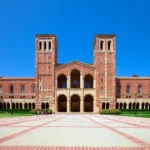
UCLA is a large public research university with strong programmes across engineering, health sciences, computing, business, media and the humanities.
- Strong areas: engineering, computer science, health sciences, business and media.
- Environment: broad academic choice and access to the Los Angeles economy.
- Competitiveness: high, particularly in popular programmes.
9. University of Michigan–Ann Arbor
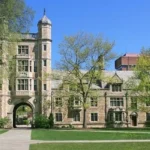
The University of Michigan is particularly strong in engineering, automotive and mechanical fields, aerospace, business, industrial engineering, computing and health sciences.
- Strong areas: mechanical and automotive engineering, aerospace, business, computer science and industrial engineering.
- Industry context: Michigan’s location provides access to major automotive and manufacturing networks.
- Competitiveness: varies by college and programme.
10. New York University (NYU)
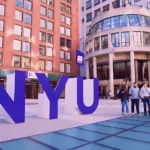
NYU offers strong programmes in business, law, data science, media, health sciences, applied mathematics and engineering.
- Strong areas: business, law, data, media, engineering and health.
- Location advantage: New York offers extensive access to finance, consulting, media and professional networks.
- Important: compare tuition and living costs carefully alongside academic fit.
Group 2: Ivy League universities worth comparing
1. Harvard University
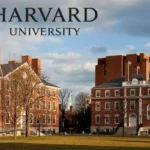
Harvard offers highly competitive programmes across public health, business, law, medicine, sciences, social sciences and public policy.
- Best fit: students targeting research-intensive or highly selective professional programmes.
- Check carefully: Harvard’s schools have separate admissions processes and requirements.
2. Yale University
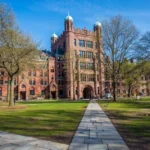
Yale is particularly strong in law, humanities, social sciences, public health, medicine, environmental studies and selected sciences.
- Academic profile: strong research and interdisciplinary study.
- Competitiveness: very high across many programmes.
3. Princeton University
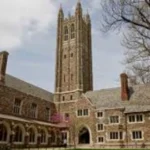
Princeton is especially strong in mathematics, physics, engineering, economics, public policy and fundamental research.
- Strong areas: mathematics, engineering, sciences and economics.
- Best fit: students who value a deeply academic and research-focused environment.
4. Columbia University
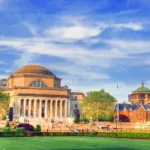
Columbia in New York is strong in engineering, data, economics, public policy, journalism, health sciences and international affairs.
- Location advantage: access to New York’s professional and research ecosystem.
- What to verify: admissions requirements for the specific school, not only the university name.
5. Cornell University

Cornell is strong in engineering, computer science, agriculture, life sciences, business, hospitality and applied research.
- Strong areas: engineering, agriculture, life sciences, business and hospitality.
- Important: requirements vary by college and degree programme.
6. Brown University
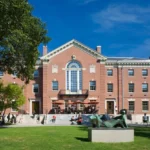
Brown is known for flexible interdisciplinary study, biomedical sciences, public health, computer science, engineering and the humanities.
- Best fit: students who value interdisciplinary flexibility.
- Competitiveness: very high.
7. University of Pennsylvania
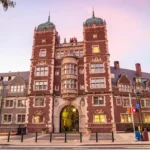
The University of Pennsylvania is strong in business, economics, engineering, health sciences, data and interdisciplinary professional education.
- Strong areas: business, economics, engineering and health.
- What to verify: admissions criteria for the school and degree you are targeting.
8. Dartmouth College
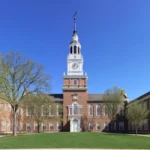
Dartmouth combines a smaller academic environment with strong programmes in engineering, business, health, sciences and the liberal arts.
- Best fit: students who prefer a smaller institution with close academic interaction.
- Competitiveness: high.
Group 3: strong US universities beyond the most selective group
1. Texas A&M University
Texas A&M is particularly strong in engineering, energy, applied sciences, agriculture and large-scale research.
- Strong areas: engineering, petroleum and energy-related fields, applied sciences and agriculture.
- Value: a major public research university with broad programme choice.
2. Arizona State University (ASU)
Arizona State University offers a wide range of programmes in engineering, business, sustainability, technology and applied research.
- Strong areas: engineering, business, sustainability and technology.
- Important: a broader admissions profile does not mean every programme is easy to enter.
3. University of Florida
The University of Florida is a major public research university with strong programmes across engineering, agriculture, business, health sciences, computing and the sciences.
- Strong areas: engineering, agriculture, computing, health and business.
- Value: broad research capacity and a large public-university environment.
Quick comparison of major US universities
Important: this table is an academic comparison, not a Saudi scholarship approval list. English requirements and scholarship eligibility can vary by school, programme, degree level and current scholarship route.
| University | State | Areas worth comparing | What to check before applying |
|---|---|---|---|
| MIT | Massachusetts | Engineering, computing, sciences | Department requirements and scholarship eligibility |
| Stanford | California | Computing, engineering, business | School- and programme-specific requirements |
| Harvard | Massachusetts | Health, business, social and applied sciences | School, degree level and English requirements |
| Caltech | California | Physics, engineering, sciences | Research fit and department requirements |
| University of Chicago | Illinois | Economics, social sciences, data, policy | Requirements of the target division or school |
| Columbia | New York | Engineering, data, economics, policy | School and programme requirements |
| University of Pennsylvania | Pennsylvania | Business, engineering, health, economics | School and degree-level requirements |
| Cornell | New York | Engineering, agriculture, business, hospitality | College and programme requirements |
| UC Berkeley | California | Engineering, computing, sciences, policy | College, programme and degree level |
| UCLA | California | Engineering, health, computing, media | Department and English requirements |
| Duke | North Carolina | Biomedical engineering, health, business | Target school and programme |
| University of Michigan | Michigan | Engineering, business, health | Degree level, programme and scholarship route |
| NYU | New York | Business, data, media, engineering | School, programme and total cost |
| Texas A&M | Texas | Engineering, energy, applied sciences | Programme and English requirements |
| Arizona State University | Arizona | Engineering, business, sustainability | Programme requirements and scholarship eligibility |
Admission requirements at leading US universities
Admission requirements differ by university, school, programme and degree level. Do not use a single GPA, SAT, ACT, IELTS or TOEFL number as a universal requirement.
1. Academic qualifications
For bachelor’s programmes
You generally need a secondary-school qualification and academic transcript. If your documents are in Arabic, the university may require an approved English translation.
There is no single GPA, SAT or ACT requirement across US universities. Some institutions require or consider standardised tests, while others use different policies. Always check the current undergraduate admissions page.
For master’s programmes
Master’s programmes normally require a bachelor’s degree or an equivalent qualification. Some programmes require a related academic background, while others accept students from multiple disciplines.
Do not treat a GPA such as 3.5 as a universal threshold. Minimums and competitive profiles vary by programme.
For PhD programmes
Doctoral requirements vary significantly. Some programmes accept applicants after a bachelor’s degree, while others expect a master’s degree or additional preparation.
Research experience, fit with faculty, the statement of purpose, recommendations and writing samples can matter greatly in research-based programmes.
2. IELTS and TOEFL: check the programme, not just the university
There is no single IELTS or TOEFL score that applies to every programme. Two schools inside the same university may use different minimums, sub-score requirements or exemption policies.
| Degree level | What to check |
|---|---|
| Bachelor’s | Undergraduate Admissions English requirement and any college-specific rules |
| Master’s | Graduate School requirement plus the target programme’s own requirement |
| PhD | Department rules, English minimums and any teaching-assistant requirements |
TOEFL 2026 update: TOEFL introduced a 1–6 score scale in 2026, while institutions may still display legacy 0–120 references during the transition. If a programme page still lists TOEFL 80 or 100, check the latest admissions guidance before interpreting it.
You can review the broader comparison in our IELTS vs TOEFL guide, and understand Band Scores in our IELTS Band Scores guide.
3. GRE and GMAT
GRE policies vary by department. A programme may require it, recommend it, make it optional or not accept it at all. Check the programme before booking the test.
GMAT is mainly used in business and management programmes, but many business schools also accept GRE or use different testing policies. The current GMAT uses a total score scale from 205 to 805, so old advice built around “700 out of 800” should not be used as a universal benchmark.
4. Supporting documents
Letters of recommendation
Many programmes ask for two or three recommendations from professors, supervisors or managers who know your academic, research or professional performance well. Strong letters use specific examples rather than generic praise.
Statement of purpose
Explain your academic background, why the programme fits your goals, and your research or career direction where relevant. Do not send exactly the same statement to every university without adapting it to the programme.
CV or resume
For graduate applications, your CV may include education, research, publications, conferences, awards, technical skills and relevant experience.
Official documents
- Degree certificates and academic transcripts.
- Certified English translations where required.
- English-language or standardised test results if required.
- Passport copy and identity documents.
- Any programme-specific portfolio, writing sample or prerequisite evidence.
How GoIELTS can help you reach the English score required by US universities
The IELTS score required by US universities is not one fixed number. Start by checking the score required by your target programme, then measure your current level and calculate the gap.
1. Timed IELTS-style practice
Practise Listening, Reading, Writing and Speaking under realistic timing so you can measure performance under pressure.
2. Performance feedback
Use practice results to identify weak skills and question types instead of spending the same amount of time on everything.
3. A focused study plan
Compare your current practice level with the programme’s English requirement, then prioritise the areas with the biggest gap. GoIELTS is an independent IELTS preparation platform; its practice scores are estimates and are not official IELTS results.
Start with our IELTS Mock Test or review How to Prepare for IELTS before building your plan.
Best-known US universities by field for scholarship students
Programme strength is often more useful than overall university ranking. If you use rankings, always note the publisher, year and subject category, then compare that information with curriculum, labs, faculty, research opportunities and career access.
Engineering, computer science and information technology
- MIT: engineering, AI, computer science and quantitative research.
- Stanford: computing, AI, electrical engineering and entrepreneurship.
- UC Berkeley: computing, data science and engineering.
- Carnegie Mellon University: particularly well known for computer science, robotics and AI.
- University of Michigan: mechanical, automotive and industrial engineering.
Medicine and health sciences
- Johns Hopkins: medicine, public health, biomedical engineering and epidemiology.
- Duke: biomedical engineering, health sciences and clinical research.
- Harvard: medicine, public health and biomedical research.
- UCLA: medicine, health sciences and related research.
Law, public policy and humanities
- Yale: law, humanities and social sciences.
- Harvard: law, public policy and social sciences.
- Columbia: law, policy, international affairs and journalism.
- NYU: law, media, public policy and related professional fields.
Science and research
- Caltech: physics, astronomy, aerospace and scientific research.
- Princeton: mathematics, physics, engineering and fundamental research.
- MIT: applied sciences and engineering research.
- UC Berkeley: sciences, engineering and interdisciplinary research.
Multidisciplinary options
- UCLA: broad range across engineering, health, business, media and sciences.
- NYU: business, media, arts, data, law and engineering.
- University of Michigan: engineering, business, health and social sciences.
- Texas A&M: engineering, energy, agriculture and applied sciences.
How to choose the best US university for your scholarship
1. Strength in your exact specialisation
Do not stop at the university’s overall rank. Compare the department, curriculum, research groups, laboratories, faculty and graduate outcomes in your field.
2. Admission requirements
Compare GPA expectations, IELTS or TOEFL rules, SAT or ACT policies for undergraduate study, and GRE or GMAT policies where relevant.
3. Academic accreditation
Check that the institution and, where relevant, the professional programme have appropriate accreditation. Professional fields can have separate specialised accreditation requirements.
4. Scholarship eligibility
After confirming academic fit, verify that the university, programme and degree level are eligible under the scholarship route that will fund your study.
5. Location, cost and opportunities
Compare tuition, living costs, housing, transport, internship access, research centres and proximity to industries related to your field.
How to apply to top US universities
Stage 1: research and shortlist programmes
Step 1: define your specialisation and degree level
Be specific. Instead of saying “engineering,” decide whether you are targeting electrical, mechanical, biomedical, aerospace or another field. Also define whether you want a bachelor’s, master’s or PhD.
Step 2: build a balanced university list
Group programmes according to how your profile compares with published requirements and admission data:
- Ambitious options: competition is stronger than your current profile.
- Well-matched options: your profile is close to the programme’s typical requirements.
- Less competitive options: your profile aligns more strongly, but admission is never guaranteed.
Do not assume any university is a guaranteed “safety school.”
Step 3: review each programme’s requirements
- Required qualification and academic background.
- IELTS or TOEFL and any exemptions.
- GRE or GMAT where relevant.
- Application deadlines.
- Application fees.
- Recommendations and supporting documents.
- Funding or financial-aid deadlines.
- Scholarship eligibility for the university, programme and degree.
Step 4: contact potential supervisors when appropriate
For research degrees, first check whether the department encourages applicants to contact faculty. If it does, send a short, personalised message explaining your research interests and their connection to the professor’s work.
Contacting a professor can help you judge research fit, but it does not guarantee admission.
Stage 2: prepare tests and documents
Book IELTS or TOEFL early enough
Allow enough time for results to arrive before the deadline and for a possible retake. Result timelines can change, so verify them when booking.
Prepare for GRE or GMAT only if relevant
Do not spend months preparing for a standardised test until you confirm that your programme requires or considers it.
Request recommendations early
Choose recommenders who know your work directly and give them enough time. Provide your CV, goals and programme information so they can write a specific letter.
Write a programme-specific statement
Explain your academic background, goals and reasons for choosing the programme. For research programmes, connect your interests to relevant research areas when appropriate.
Prepare official documents
Follow each university’s document instructions. Some allow uploaded copies first and request official documents later. If your records are in Arabic, check the university’s translation requirements.
Stage 3: submit applications according to real deadlines
There is no universal “Early” or “Regular” deadline across all US universities and graduate programmes. Record the actual deadline from each admissions page, plus separate deadlines for test scores, scholarships or funding.
Applications commonly include:
- online application form;
- CV or resume;
- statement of purpose or personal statement;
- transcripts and certificates;
- recommendation letters;
- test scores if required;
- application fee where applicable.
Do not wait until the final day. Technical problems can happen, and missing documents can delay completion.
Stage 4: track the application and admission decision
After submitting, monitor the university portal and email for missing documents or updates. Decision timelines vary widely, so do not rely on one fixed “6–12 week” rule for every programme.
Possible outcomes include:
- Admission: full admission.
- Conditional admission: admission subject to additional requirements.
- Waitlist: the application remains under consideration.
- Rejection: the programme does not offer admission in that cycle.
After admission, international students may receive the documents required for the F-1 visa process, such as Form I-20 where applicable. Keep official copies of your admission and immigration documents.
Common mistakes when choosing a US university
1. Choosing by overall ranking only
A university with a lower overall rank may have a stronger programme in your field than a university with a higher overall rank. Compare subject strength, not just the university brand.
2. Ignoring scholarship-route requirements
You can receive academic admission and still discover that the programme does not qualify under your scholarship route. Check eligibility before investing heavily in the application.
3. Not checking accreditation
Do not rely on a university’s marketing. Verify institutional and programme accreditation where relevant. Also remember that US accreditation and Saudi scholarship eligibility are separate questions.
4. Starting too late
Language tests, recommendations, official documents and tailored statements all take time. Work backwards from the real application deadlines of the programmes you are targeting.
5. Applying only to extremely selective programmes
A balanced list reduces the risk of finishing the cycle with no offers. Even a strong academic profile does not make admission guaranteed at highly selective programmes.
Practical tips to strengthen your US university application
1. Plan around actual programme deadlines
Create a schedule for language tests, recommendations, documents and every application deadline.
2. Meet the English requirement your programme actually uses
Do not assume you need IELTS 7.0 or 7.5 simply because the university is famous. Check the exact overall score and any minimum sub-scores required by your programme.
3. Strengthen the most important part of your profile
Research programmes may care strongly about research experience and academic fit, while professional programmes may place more emphasis on work experience or prerequisites.
4. Tailor every application
Explain why the programme fits your background and goals. A generic statement used unchanged for many universities is usually less persuasive.
5. Verify every requirement from an official source
Use the university and programme’s official admissions pages for test scores, deadlines and documents. Use the official Saudi scholarship source for current eligibility.
Conclusion
Choosing the best US university for a Saudi scholarship is not about finding the most famous name. It is about finding the strongest programme for your field that also matches your academic profile, English level, scholarship route, budget and career goals.
MIT, Stanford, Harvard, UC Berkeley, Princeton, Columbia, Johns Hopkins, the University of Michigan and many other US universities are excellent options to compare, but the right choice depends on your exact programme and degree level.
Before applying, compare admission requirements, English tests, research and internship opportunities, location and cost, then verify scholarship eligibility. That process helps you choose the university that is best for your plan rather than simply the most famous university on a ranking list.
Frequently Asked Questions
There is no single universal list that applies to every situation. You need to distinguish between US academic accreditation, Saudi recommended-university status, and eligibility under a specific scholarship route. Check the university, specialisation and degree level in the current official Saudi source before applying.
University of the People is a US institution with institutional accreditation in the United States, but US accreditation does not automatically prove Saudi recognition or scholarship eligibility. Before enrolling, verify the university, programme, degree level and study mode with the Saudi authority or organisation that will evaluate the qualification.
There is no single best country for every student. The United States offers a very large range of universities and research programmes, while the UK, Canada, France and other destinations may be better depending on your field, university options, scholarship rules, cost and career goals.
Do not assume that an online programme is scholarship-eligible just because the university itself is accredited. Eligibility can depend on the scholarship route, programme, degree level and study mode. Many scholarship pathways require in-person study, so verify the current rule before enrolling.
Leading US universities include MIT, Stanford, Harvard, UC Berkeley, Princeton, Columbia, Johns Hopkins, the University of Michigan and Carnegie Mellon. The best university for you depends on your field, degree level, admission profile and scholarship eligibility rather than overall reputation alone.
About the Content Team at GoIELTS
GoIELTS creates specialized content for IELTS with contributions from writers experienced in education and test preparation.
We follow clear editorial standards for accuracy and quality — read our Editorial Policy


Related Posts
IELTS vs TOEFL: Which Test Should You Take in 2026?
October 27, 2025
IELTS Band Scores Explained: Score Tables & Calculation 2026
September 20, 2025
IELTS Resources Hub 2026: Best Websites, Books & Practice Tools
November 4, 2025

Full vs Mini IELTS Mock Test: Which One Do You Need?
September 16, 2026

IELTS Writing Task 1: Templates, Examples & Tips 2026
October 11, 2025
IELTS Academic Test Samples PDF
December 26, 2025
GoIELTS is an independent training platform specializing in IELTS preparation and is not affiliated with any official organization that owns or administers the IELTS test. The content is provided for educational and informational purposes only and reflects our team’s experience and the latest information available at the time of publication. Information may change without notice. Any use of the information is at the reader’s own responsibility, and results vary depending on each learner’s level and effort. For the latest official requirements, we recommend checking the official IELTS website and the relevant scholarship or sponsoring authority. — Full Disclaimer